Jupiter Approach
SYS.COORD: 5.204 AU
STATUS: ACQUIRING TARGET
MISSION: JUNO V2
T-MINUS: 00:00:00
Community signal online

Class: Gas Giant

JUPITER

The largest planet in the solar system, a majestic world of swirling storms, deep metallic oceans, and a miniature solar system of its own.

INITIATE DESCENT
● SIGNAL ONLINEGAS GIANT ENERGYORBITAL MOON SYSTEMENTER THE ORBITDEX // TELEGRAM // X // PUMP.FUN
ARCHIVE ENTRY 01

The Monolith of the
Outer System

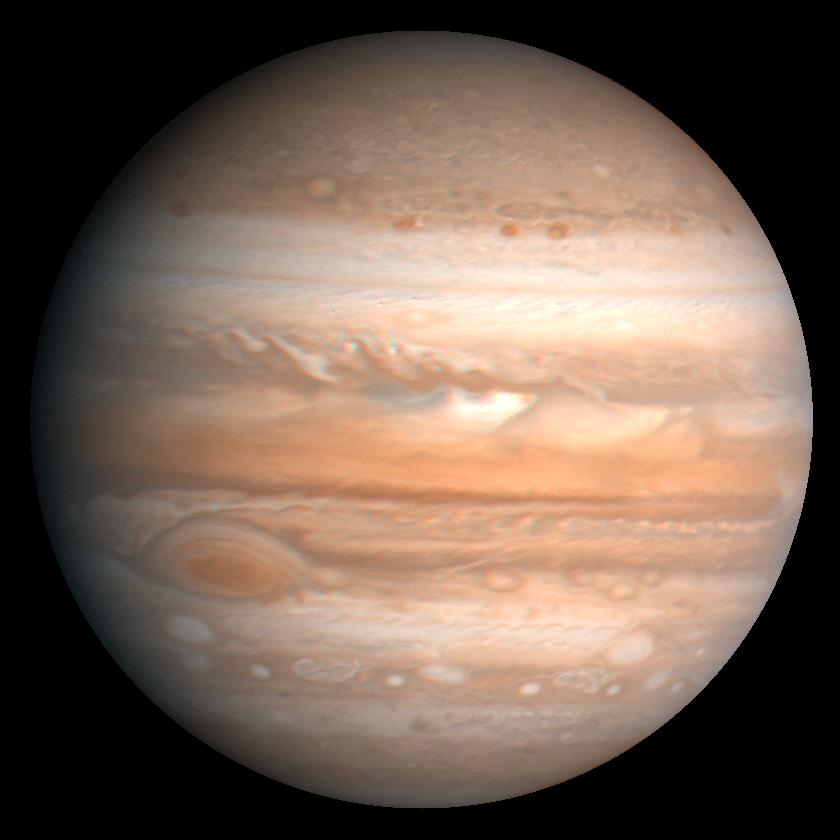
Jupiter is more than a planet; it is a failed star. Composed primarily of hydrogen and helium, it holds more than twice the mass of all other planets in the solar system combined. Its immense gravity shaped the early solar system, protecting the inner rocky worlds from cataclysmic bombardments while simultaneously orchestrating the orbits of asteroids and comets.

Beneath its beautifully chaotic bands of ammonia clouds lies an abyss of crushing pressure. The atmosphere transitions from gas to a supercritical fluid, eventually condensing into a vast ocean of liquid metallic hydrogen—an exotic state of matter that generates Jupiter's immensely powerful magnetosphere.

The most iconic feature, the Great Red Spot, is a persistent anticyclonic storm larger than Earth itself. Though it has been shrinking over the past century, its winds still howl at over 400 mph, a testament to the violent thermal dynamics driven by the planet's internal heat.
TELEMETRY DATA

Planetary Diagnostics

ATMOSPHERIC COMPOSITION

HYDROGEN (H₂) 89.8%
HELIUM (He) 10.2%
METHANE (CH₄) ~0.3%
AMMONIA (NH₃) ~0.026%
> Trace amounts of hydrogen deuteride, ethane, and water detected.
> Core composition remains theoretical; likely a dense mix of elements under ~4,000 GPa.

EQUATORIAL RADIUS

71,492 km
EARTH = 6,371 KM

MASS (EARTH = 1)

317.8 M⊕
2.5x mass of all other planets combined.

MAGNETOSPHERE

14x STRONGER THAN EARTH'S
EXTENDS 7 MILLION KM TOWARD SUN
SYSTEM SATELLITES

The Galilean Moons

JI

Io

The most volcanically active body in the solar system, caught in a gravitational tug-of-war between Jupiter and other moons.

DIA: 3,642 KM ORBIT: 1.7 DAYS
JII

Europa

A fractured icy crust covering a vast subsurface global ocean. Prime candidate for the search for extraterrestrial life.

DIA: 3,121 KM ORBIT: 3.5 DAYS
JIII

Ganymede

The largest moon in the solar system, larger than the planet Mercury. The only moon known to have its own magnetic field.

DIA: 5,268 KM ORBIT: 7.1 DAYS
JIV

Callisto

The most heavily cratered object in the solar system. A geologically dead world holding an ancient record of the early cosmos.

DIA: 4,820 KM ORBIT: 16.7 DAYS
LINK COPIED TO CLIPBOARD